
Bridging the gap – a bucketlist item
With no expectations and a lot of assumptions, I boarded the plane for Helsinki.
Sailing on a liquefied natural gas (LNG) carrier had been on my bucket list for quite a few years, and now I was finally on my way to join a small scale LNG carrier to sail along for a couple of days.
As with every ship visit, it started with thorough checks with Marine Traffic about departure and arrival times as these are not always set in stone. To be flexible I flew in the day before and liaised with the ship’s agent to agree on the pick-up time from the hotel. The best way to describe that 24 hours between arriving in Helsinki and boarding the vessel is like being a kid, looking at the gifts underneath the Christmas tree but not knowing what’s inside and when you can open them.
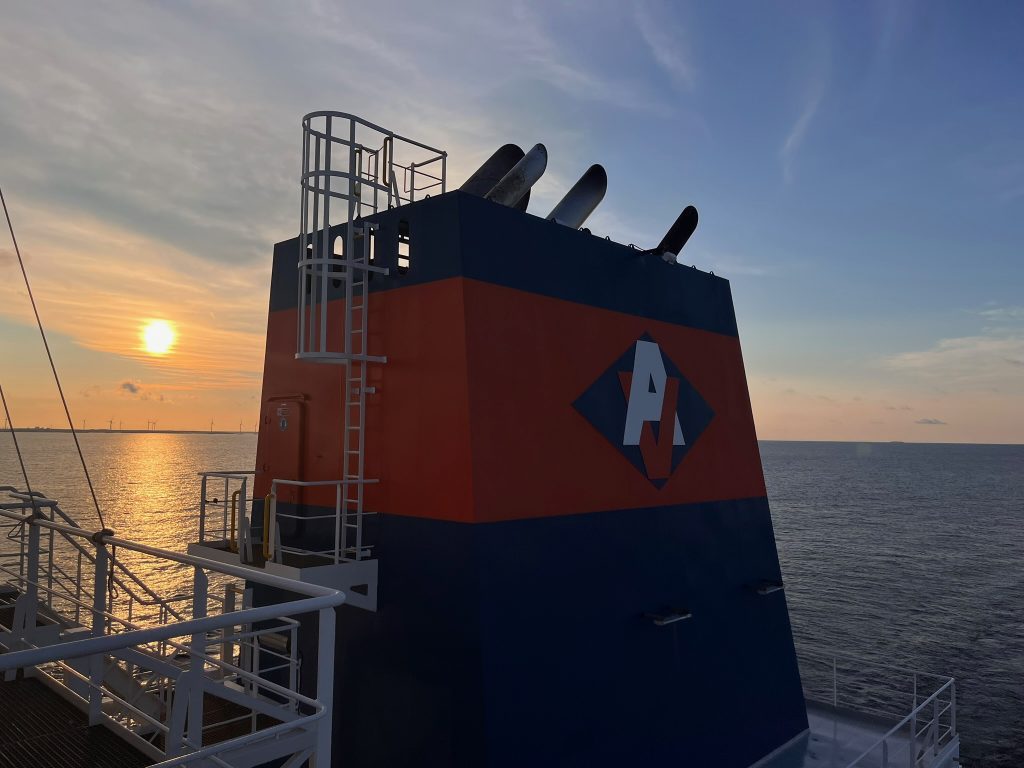
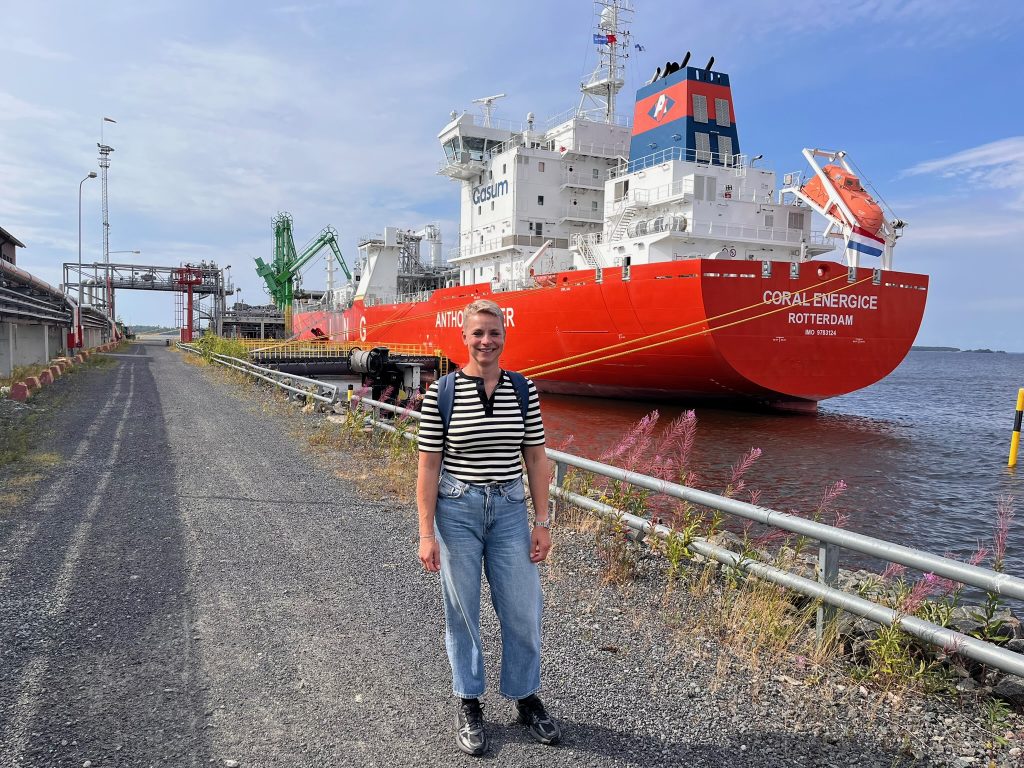
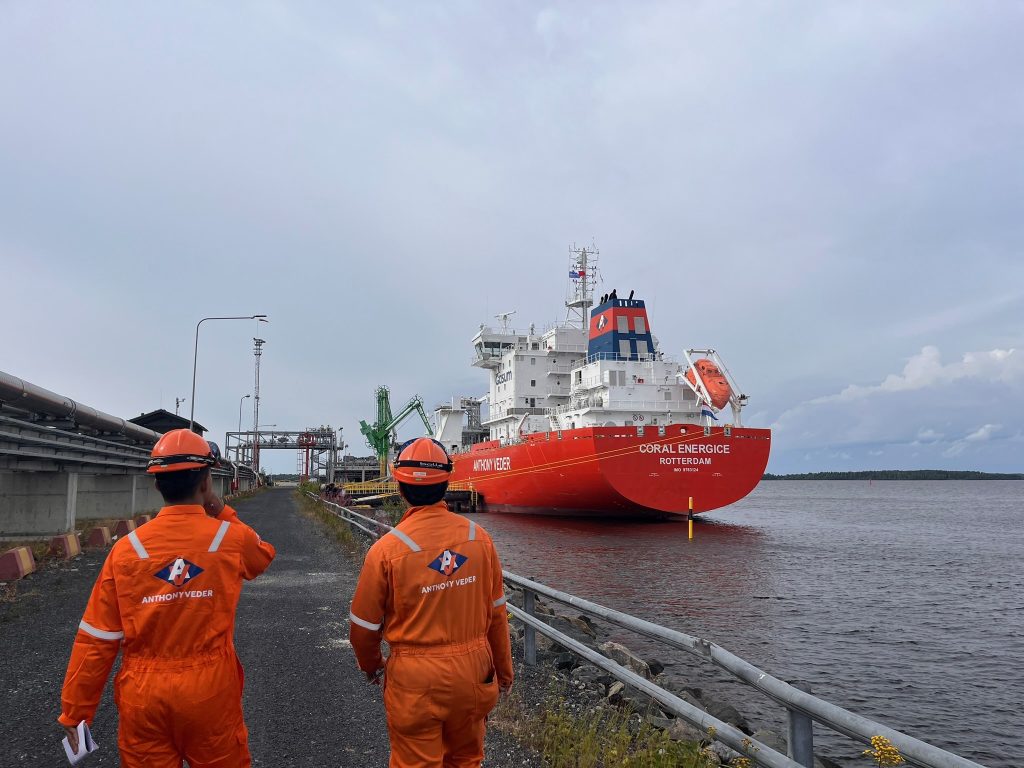
Sometimes you’re just lucky and the vessel that had an itinerary that would best fit my schedule and that had accommodation available on board was the Anthony Veder Coral EnergICE. An ice class LNG carrier, owned by an SGMF member, chartered by an SGMF member, equipped with an SGMF member’s cargo handling system and with a very nice mixed and diverse crew on board.
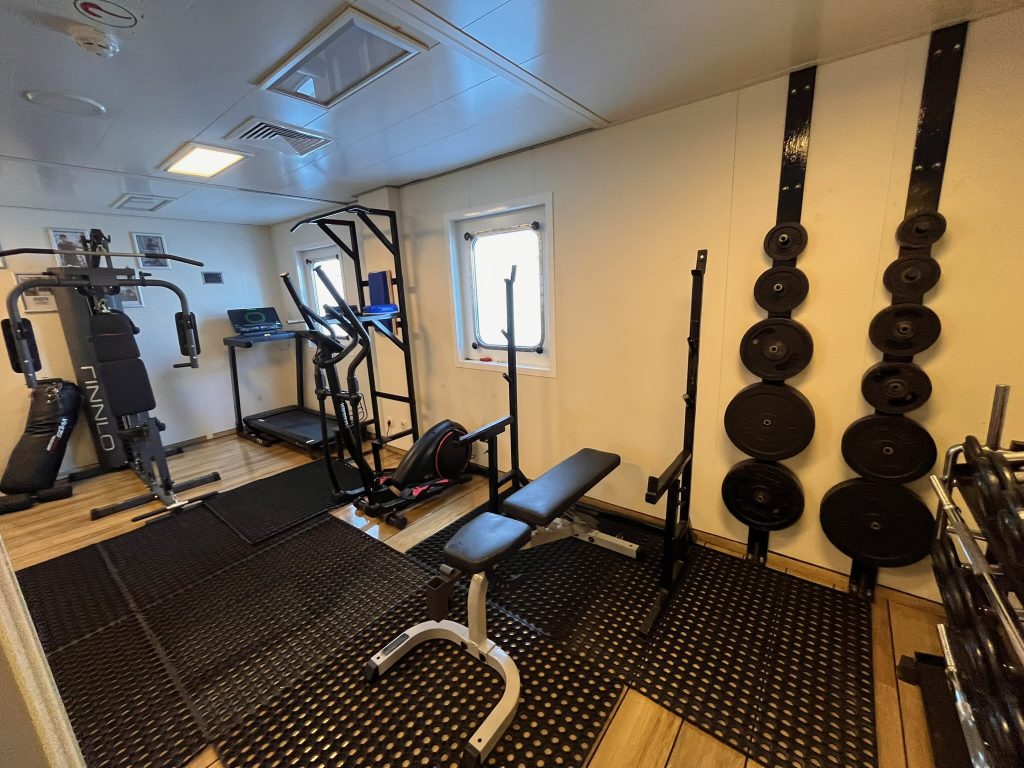
And to turn these strokes of luck into a hat trick, the captain and I also shared the same passion, working out, so there was even a well-equipped gym on board!
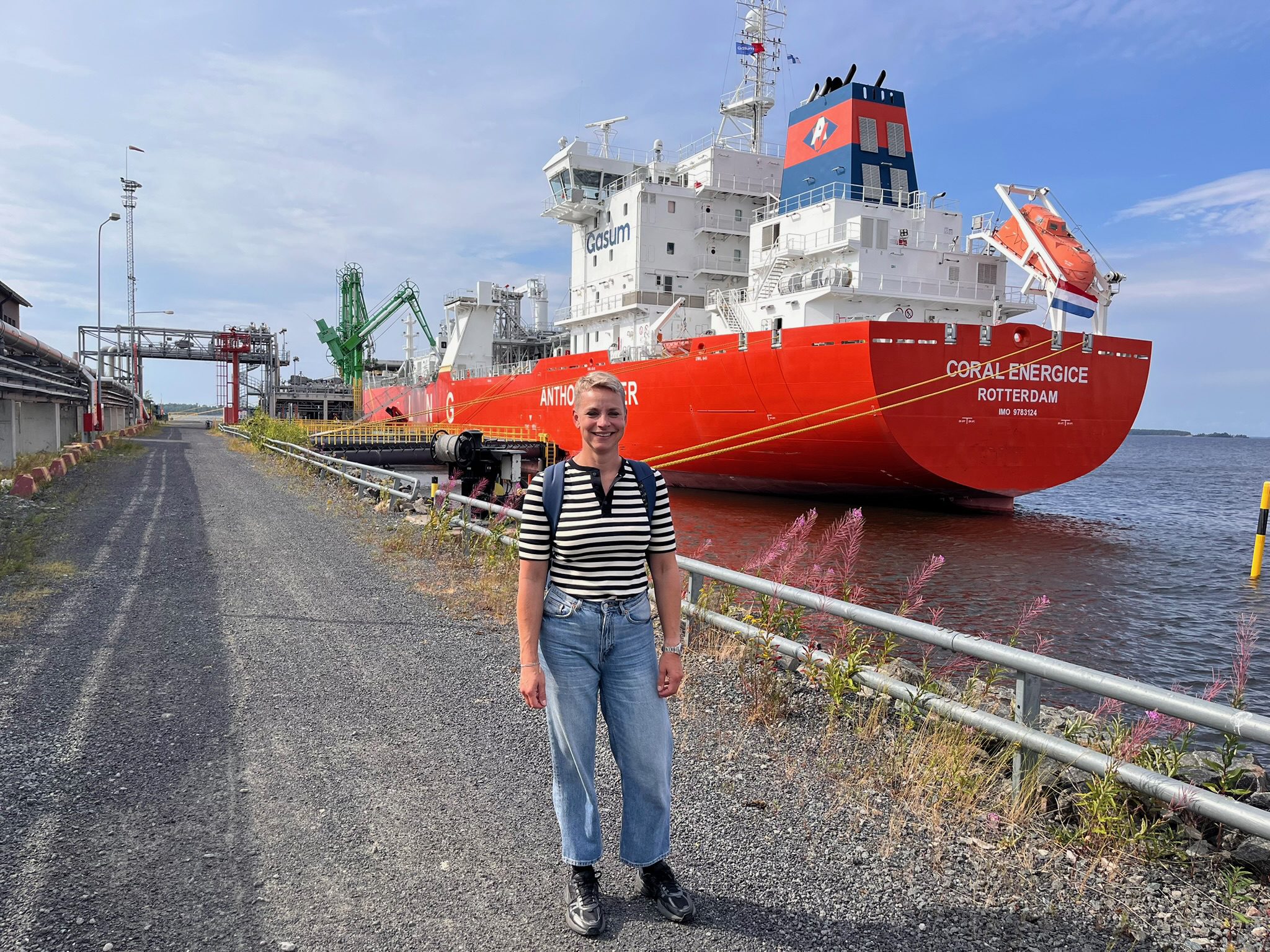
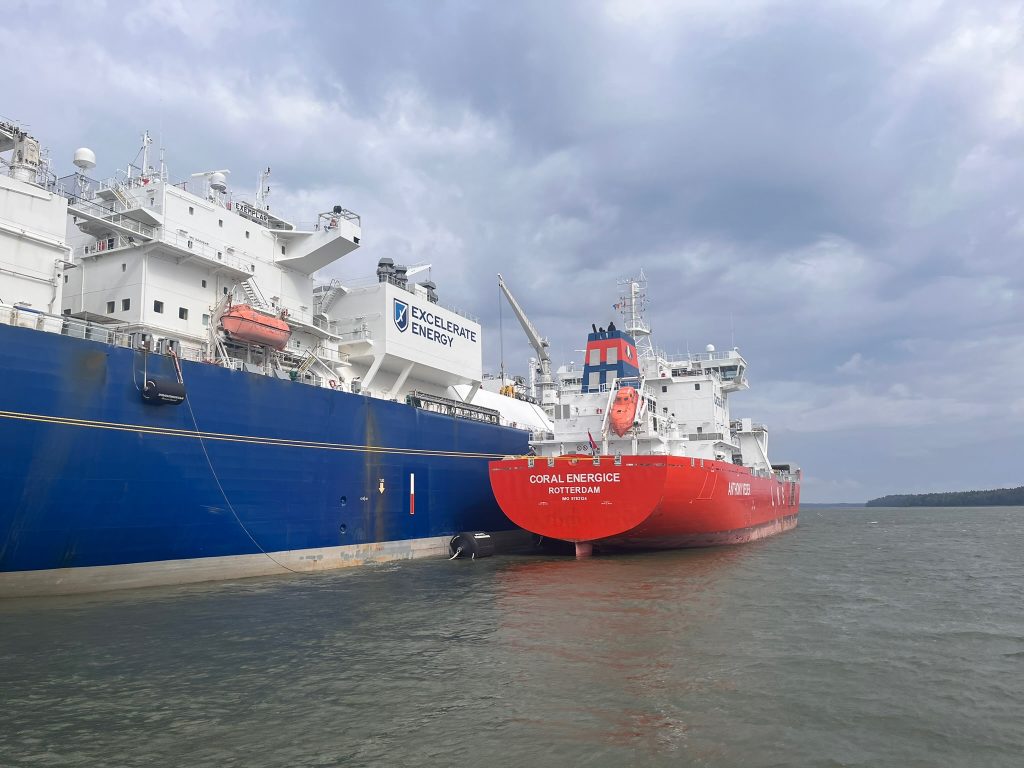
The taxi driver dropped me at the terminal in Inkoo where the Coral EnergICE was just loading from a floating storage and regasification unit (FSRU). What an impressive and welcoming sight! And when the pilot came back to shore with the tugboat, I took his place and was taken out to the vessel.
I have been on board so many different vessels over the course of my career and I know from experience that port stays are always stressful times for crew. During those few hours, everything needs to be done: cargo operations, crew exchanges, lots of paperwork, maintenance, welcoming surveyors, customers, customs (and in this case also a passenger), so I didn’t expect a very warm welcome, but completely the opposite was true.
While everyone was so busy, I was given a nice cup of coffee, my own refillable Anthony Veder drinking bottle, and was shown where the water taps are and handed a copy of the sustainability report to kill some time while everyone else was busy. He definitely understood how to make my sustainability heart beat faster!
After the practical matter of showing me where my cabin was for the coming days, the familiarisation was done by the 3rd officer, and under the (very subtle) supervision of the captain, I learned all about the do’s and don’ts on board, the muster points, mealtimes (very important) and the safety rules.
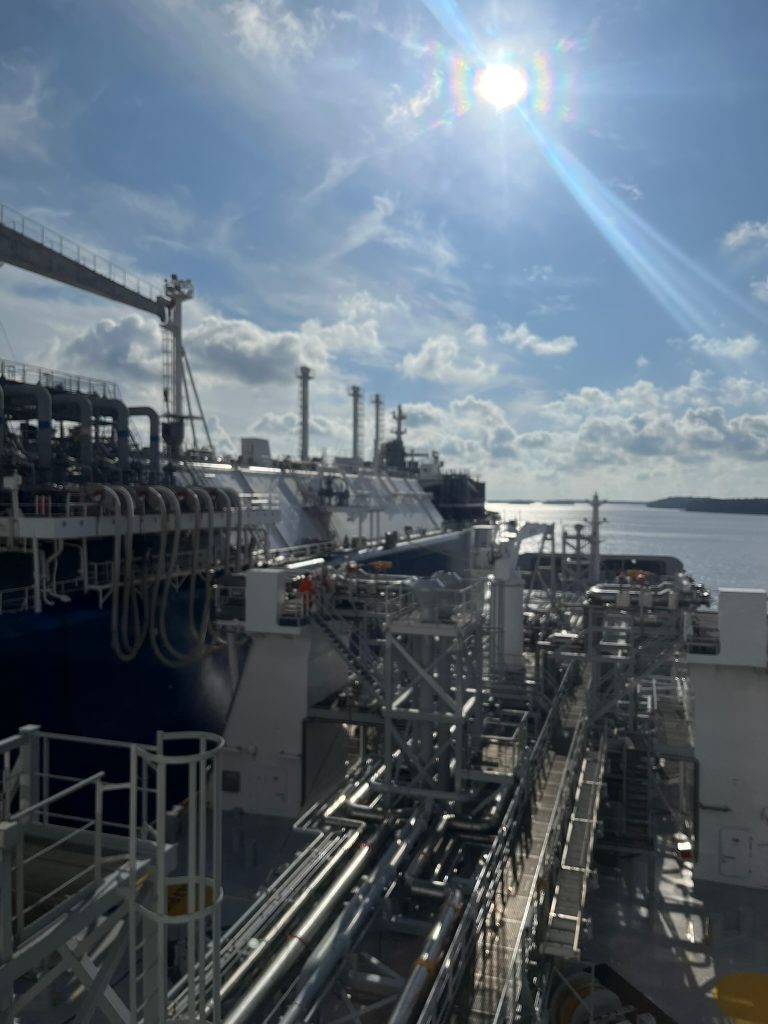
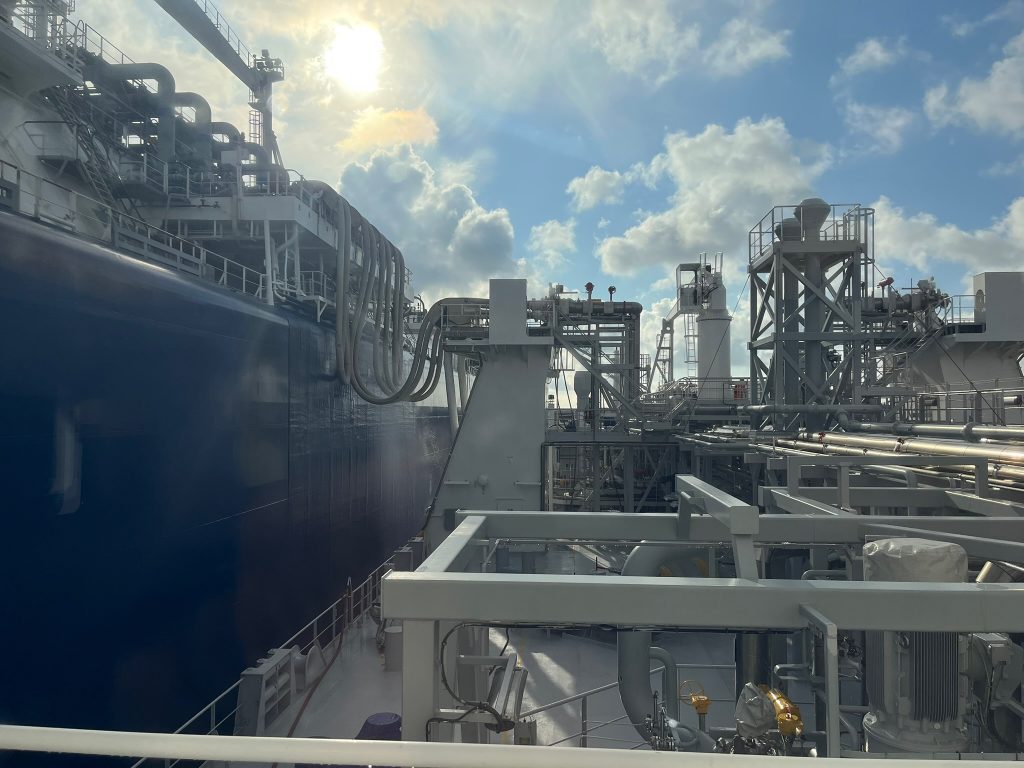
The LNG industry has a proven safety track record and as much as we want to make life in the industry easier, we should never compromise on safety. Joint plans for bunker operations, pre delivery meetings, checking all the connections and double checking them again, agreeing on flowrates, etc., etc.
All these steps are required to make the transfer of a cryogenic gas safe. And it’s only with the right skills and competences, combined with continuously developing easier ways to carry out the compatibility checks that we can make this proven safe way of working slightly easier.
Loading would last till the morning, so that gave me (and the crew) the evening to get to know each other and explore this beautiful ship a little. But before the captain had time for me, he had to do something which I liked a lot and that went against many of the prejudices that we often have.
Talking about bridging the gap, we often talk about the disconnect between ship and shore personnel, but in this case, the captain and the technical superintendent had a video meeting to go through all of the matters that are relevant and also to just have a chat. I loved seeing that and as I could listen in (not intentionally listening to it, but could not resist!) I was happy to hear how they communicated, like a true team.
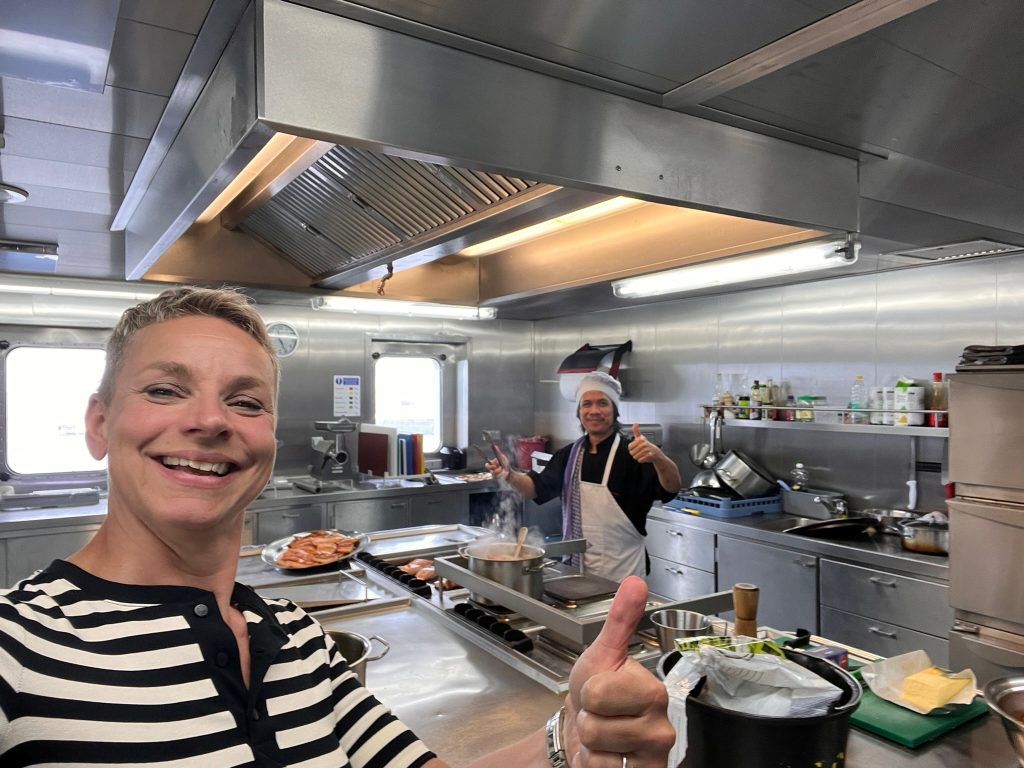
And then it was dinner time; another highlight of my trip. I am someone who loves food and not to have to cook for myself, but be provided with a proper and tasty meal, was no hardship. Being the cook on a ship must be very tough; accommodating different cultures and different food preferences, and needing to provide some variation but not too much (to keep the structure) is not an easy task. Hats off to Rosie and his team as the food was lovely on board.
Cooking for different cultures is not the only challenge on a mixed crew vessel, but what I saw on the Coral EnergICE and on other ships that I’ve visited in the past, is that everybody gets along and they don’t judge as much as we do ashore. So this is definitely another important key takeaway; when everyone does their job and we work together towards a common goal, your background, religion or gender do not (or should not) matter. Mutual respect is the cornerstone for a well-functioning team. At sea and ashore.
After a good night’s rest, with a comforting humming of machinery in the background, the second day started with a good breakfast and all the various preparations for our upcoming departure. I spent the morning talking to as many crew members as possible to hear all their insights on LNG cargo handling, managing boil off gas, controlling the optimum speed and power of the engines, etc., etc. Ships like this are not just ships, they are small factories, with all the elements connected so that they operate safely and smoothly.
And then the big moment arrived; loading was finished and a formal meeting was held between the loading officer from the FSRU and the cargo officer from the Coral EnergICE (and me again, as the fly on the wall). This conference didn’t take as long as the pre connection conference, but still I was amazed to see the thorough checks, double checks, checklists and documentation that needed to be completed. After that was all done, the hoses were disconnected, everything was secured and we were ready to set sail.
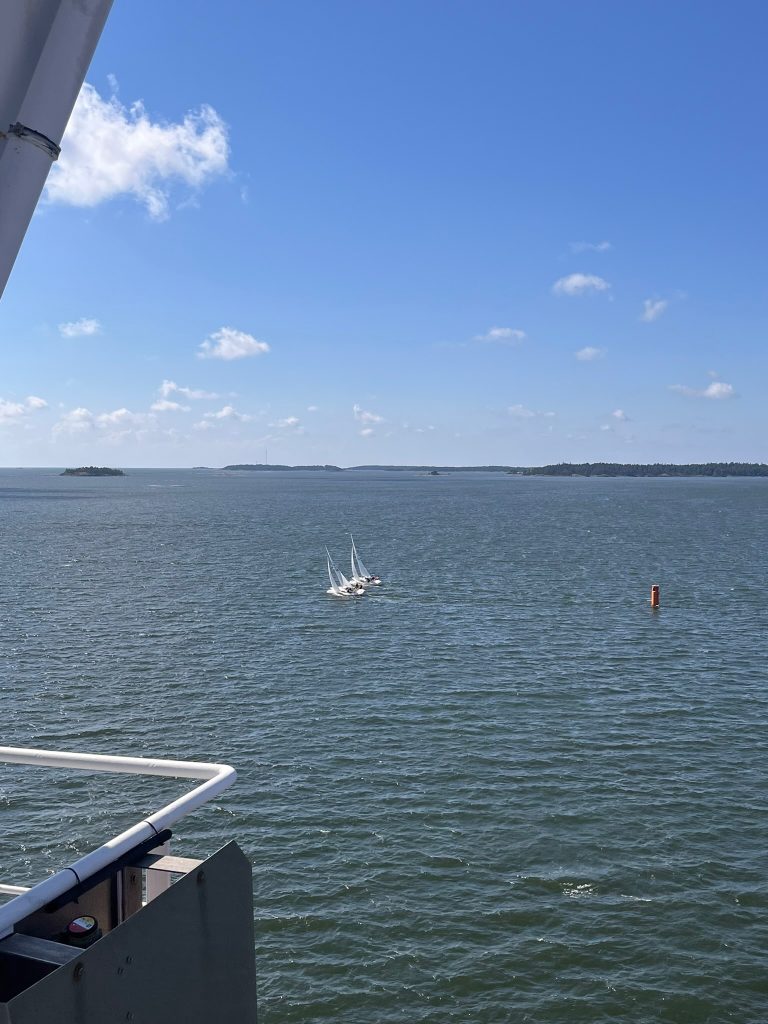
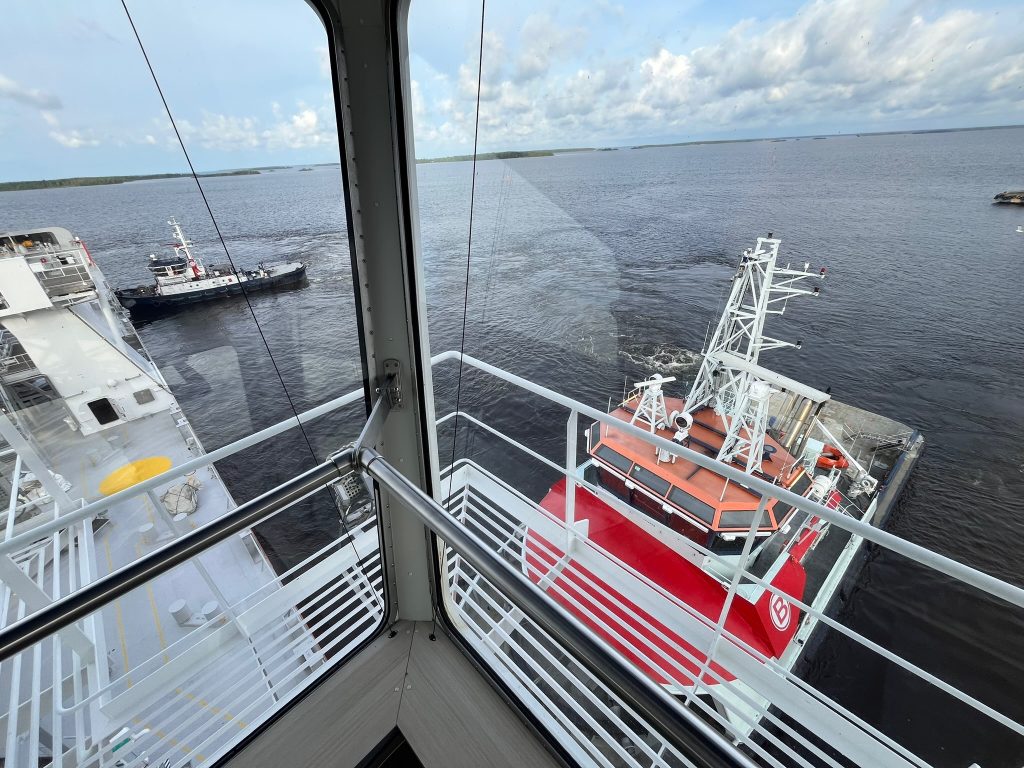
I was on the bridge to witness everything, and how lucky can you be? A regatta was taking place at the same time, so we were surrounded by small sailing vessels.
I had the feeling that our ship was invisible as they paid no attention to us. Deep respect to the captain for staying calm and relaxed, while I got nervous about those little boats crossing our bow. Just to ensure they would see us, I got to use the horn.
That was a bit of a disappointment as it was just pressing a button on the desk in the wheelhouse and not as exciting as I’d expected. But still, how many people can say that they’ve blown the horn of a real LNG carrier?!
The time between ports was for me the time to explore a life at sea, so I spent as much time as I could with the crew.
I did the bridge watch from midnight to 0400, got the full tour and explanation of the cargo system on board and the distinctive features of the ship (ice class, so very special), stayed close to the chief engineer in the engine room during the changing from unmanned machinery space (UMS) to manned operation, when the pilot had to come on board, and so much more.
I loved my time at sea. And although it might sound simple, switching the engines to manual operation mode requires a lot of skill and experience. The chief engineer and the 2nd engineer worked together like a well oiled machine, listening to the sounds from the engine room while keeping an eye on the monitors. And all of that while answering my long list of questions.
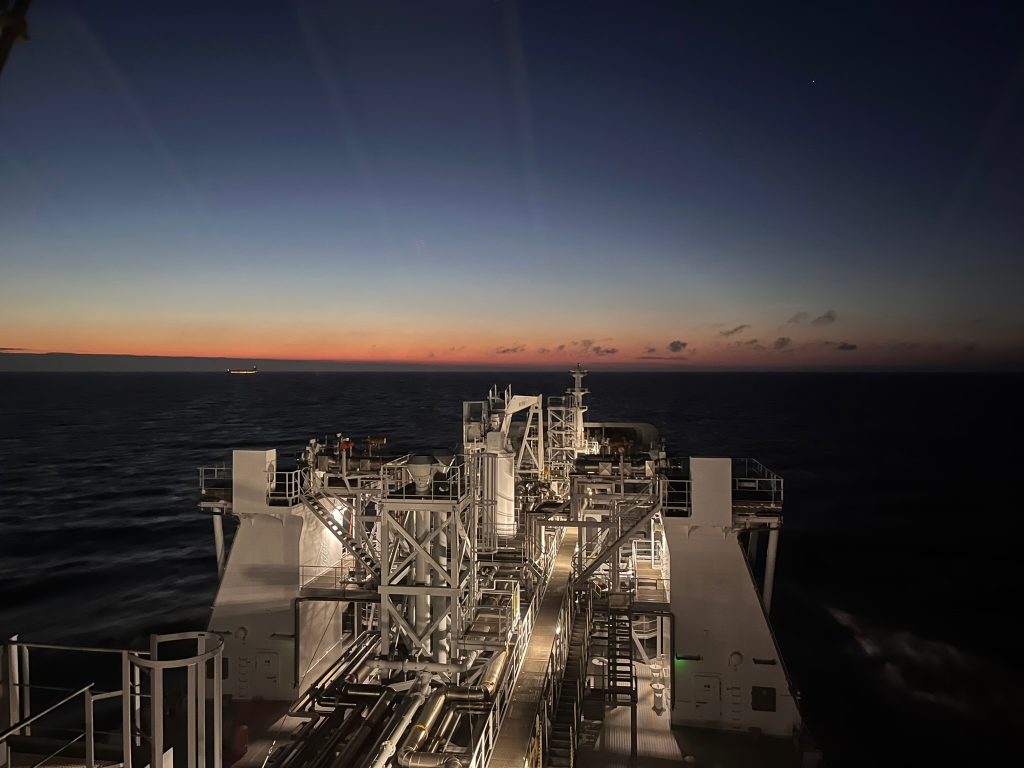
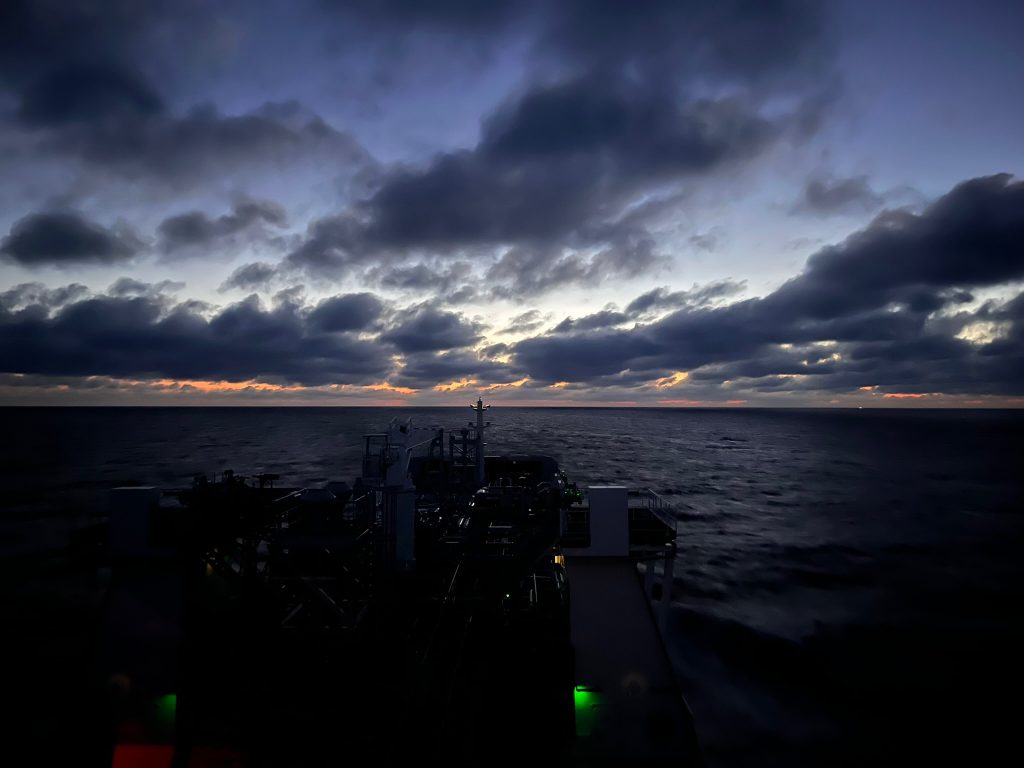
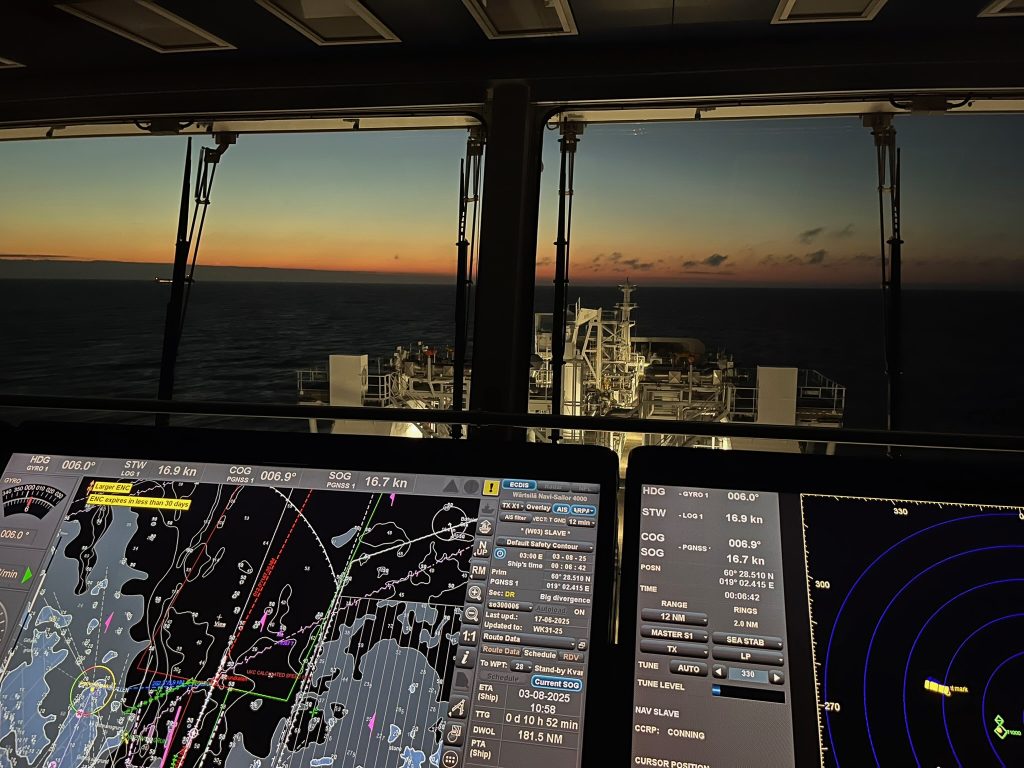
A funny detail: people often refer to the engine room as being a dark and depressing noisy room in the bottom of the vessel, but that wasn’t the case on the Coral EnergICE! The vessel was designed with human wellbeing in mind and there’s a light shaft that brings some daylight into the engine room. It’s all a matter of details.
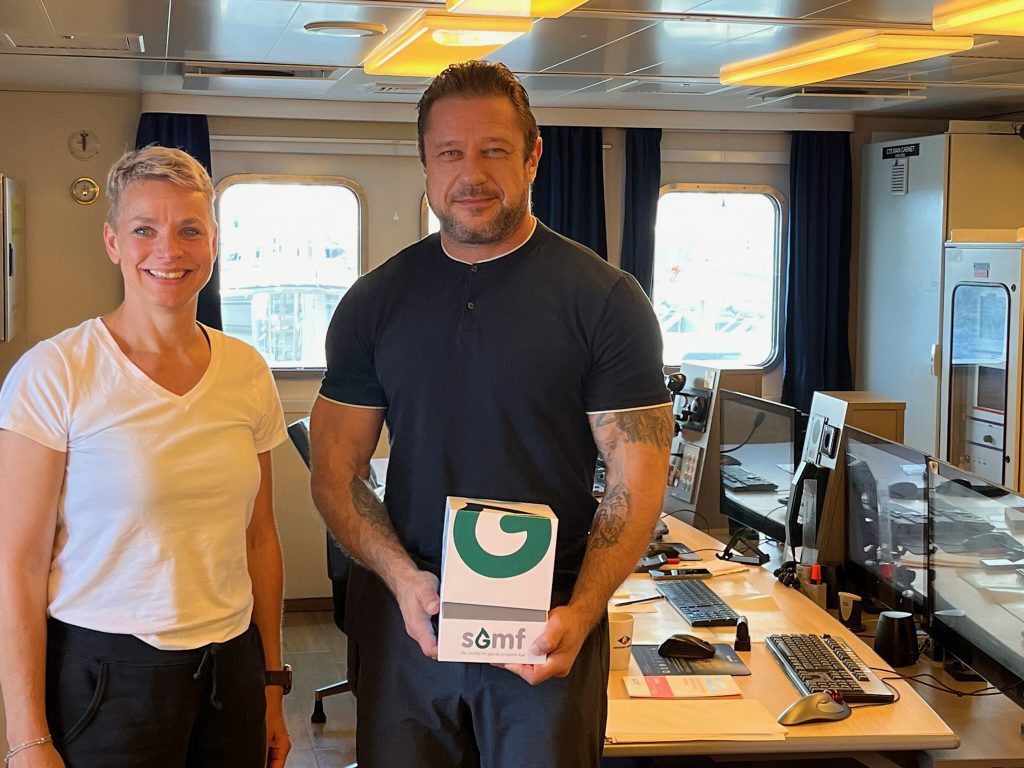
Having been involved in the great work of SGMF since 2014, I was pleased to explain more about what we do to the crew during my days on board, whenever it was relevant. And there’s no such thing as coincidence: the cargo officer had to prepare a certain document for which the SGMF boxset that I’d brought with me provided some useful guidance.
But all good things come to an end and with the view of the terminal on the horizon, it was time to clean my cabin, change the bedlinen and get ready for departure. As we had to wait for all of the paperwork to be done and (yes, also at discharging) the hours of pre checks and conversations, I took the opportunity to fully absorb that too, and to have a chat with the responsible person at the terminal about the LNG pathway and decarbonisation.
LNG had been adopted there as a cleaner fuel for the steel factory, and now the first talks on replacing it with (partly) bioLNG have started. Decarbonisation is an ongoing effort and not only in the maritime industry.
What an experience and what an adventure. I fully realise that I was extremely lucky to have such a great time and that it might have been different with less favourable weather or a crew that was not as warm as this one was, but that’s even more reason to do it again.
Not only would I like to learn more of life at sea, but I truly believe that having an in depth conversation with any particular crew member about the wider picture of decarbonising the maritime industry adds value to everyone. It’s all about mutual respect and understanding and only by sincerely listening to each other and trying to understand each other will we be able to bridge the gap and make steps towards a safe and sustainable maritime industry.
Thank you to the full crew of the Coral EnergICE, and to Nynke, Peter and Björn from Anthony Veder for accommodating me on this trip and to all of the seafarers out there, who do this every day, all year long. You make the (maritime) world go round.
Claudia Beumer,
Membership and Communications Manager SGMF